
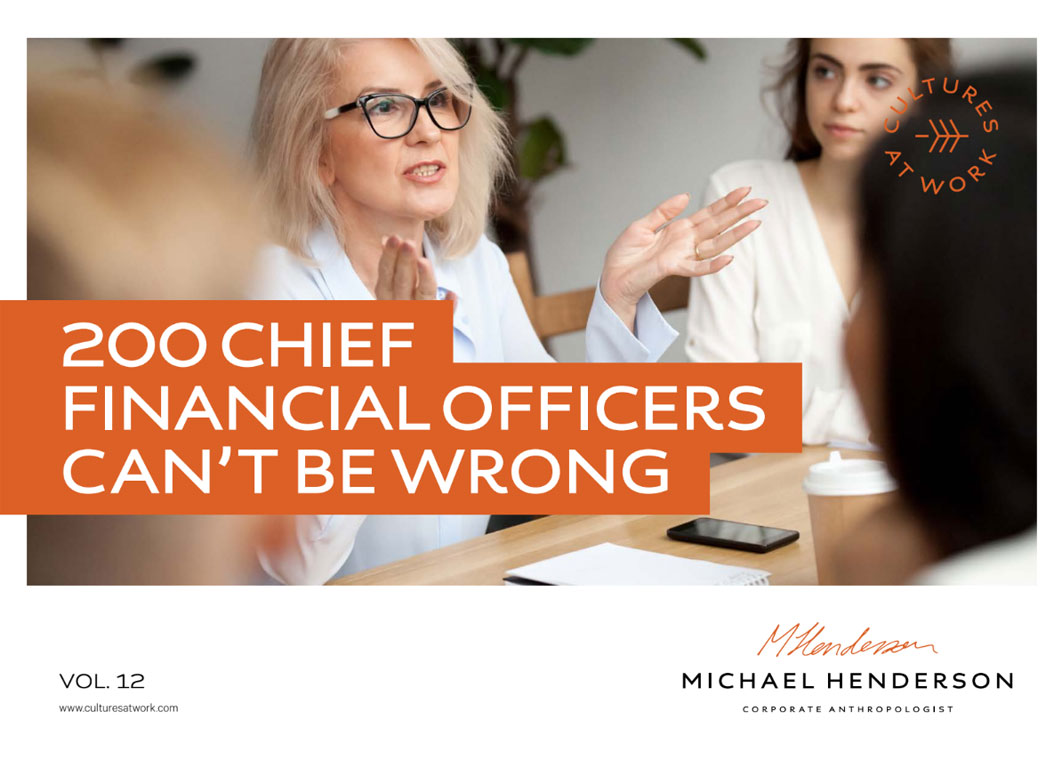
IF YOU ASKED 200 OF YOUR COUNTRY’S LEADING CHIEF FINANCIAL OFFICERS HOW IMPORTANT AND RELEVANT ORGANISATIONAL CULTURE IS TO THEIR BUSINESS, WHAT ANSWER WOULD YOU EXPECT TO GET?
Last month I did just that. Two of the two hundred indicated that culture was relevant and important to their organisation but it was also just one of many challenges their business was working through. The rest indicated it was an immediate and pressing priority for their business. Furthermore, when asked how many organisations were well positioned in terms of the senior leadership team truly understanding culture, how it forms and functions, how it’s structured and most importantly, how it delivers performance, not one company felt informed and fully prepared.
Interestingly not one CFO indicated culture was of no relevance to their business.
How times have changed. Just eight years ago, I recall asking a similar sized group of CFOs at a conference the same question and had almost the inverse response of last month. So, the question arises, what’s changed?

WHAT’S CHANGED?
1. The awareness of what culture can do to business has been made undeniable through the chaos of the business cultures impact on Australian financial institutions, New Zealand law firms, Hollywood and the #MeToo response. And a seemingly never-ending list of professional sports team dealing with unethical players and leadership issues across the world.

2. Organisations have realised that the popular staff engagement surveys just aren’t providing the right sort of information regarding their company culture.
The surveys only tell the business what people think about their culture but not what culture the business has, or at what level it performs.

3. The importance of the intangible aspects of business are finally being taken seriously by most C.F.O’s. This includes: brand as an asset; nett promoter scores as an indicator of future revenue; the company culture’s level of performance and the mental agility of decision making across the business.

SO, WHAT’S NEXT?
It’s time to get serious about company culture. Every organisation has a culture. Most of those cultures are normal. Few of them are optimised. Failure to optimise your culture will cost you dearly, as C.F.O’s are now acknowledging.
So, ask yourselves;
Q ‘What is your organisation doing to get its head in the culture game?’
Q ‘What are your senior leaders doing to ensure they understand the full connotations of business performance as set by their company culture?’
Q ‘On a scale of 1 to 10, how informed is your organisation about how culture functions in your business?’
ON A PERSONAL NOTE, I HAVE TAKEN FEEDBACK FROM THE C.F.O’S TO UP MY OWN GAME.
As a professional anthropologist I am fortunate to have learned and developed a deep understanding of culture. But because most organisations have only placed a moderate or low emphasis on company culture, until now I have only been offering clients enough knowledge and understanding of culture to meet their needs. To take them from average to good, or from good to great, depending on the customer brief and business needs.
AS OF APRIL 1ST 2019, THIS HAS CHANGED.
From this point forward both the ‘high-performance culture’ program and the ‘leaders worth following’ program will include the advanced knowledge and awareness required to master culture and its performance at the highest levels.
This will impact on many aspects of your business including: who you recruit; who you promote; how you reward and recognise your people; personal and professional development and team building; embodying the deepest and truest essence of customer service; accountability and responsibility levels of all staff; the essence of leading a high performance culture.
If you have never worked with me before on your organisational culture and you too have realised the time is now, I’d be delighted to discuss your needs and appetite to master your company culture, once and for all.
You can contact me at info@culturesatwork.com or through LinkedIn.
Game-On!
Warm Regards
Michael.